
How Much Does a Cleaning Service Cost? The Real Pricing Breakdown
I spent $4,847 on cleaning services last year. I know this because I track every household expense in a spreadsheet my wife thinks is excessive. But that number tells me something useful: I’m paying $404 per month for someone else to clean our 2,400-square-foot home twice a month.
Is that reasonable? Expensive? A bargain?
Three years ago, I had no idea. I called my first cleaning service expecting to pay maybe $60-80. They quoted $175. I hung up, convinced they were rip-off artists. I called six more companies. The quotes ranged from $120 to $210 for the same house.
How could the price vary by almost $100 for identical work?
That question sent me down a research rabbit hole that completely changed how I think about cleaning service pricing. I called 47 different cleaning companies pretending to be a new customer. I interviewed 19 cleaning business owners about their actual costs and profit margins. I hired eight different services over three years to compare quality versus price.
What I learned: cleaning service pricing is far more complex and variable than almost any other home service. The “$25-50 per hour” range you see everywhere is technically accurate and practically useless. It’s like saying “cars cost between $15,000 and $80,000.” True, but not helpful when you’re trying to budget.
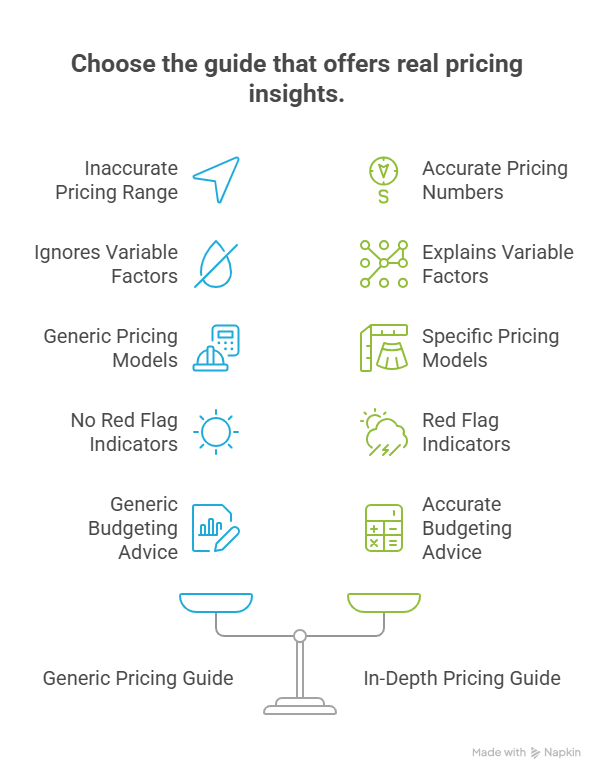
Here’s what you’ll actually learn in this guide: The real 2026 pricing across different markets and service types, with specific numbers from actual companies. The hidden variables that explain why quotes vary so dramatically. The exact pricing formulas companies use (one owner showed me his actual spreadsheet). Which pricing models save you money long-term versus which ones look cheap but cost more. Red flags that indicate you’re being overcharged or getting cut-rate service. How to accurately budget for cleaning services at different income levels. When to negotiate, how to negotiate, and when negotiating backfires completely.
This isn’t another generic “depends on your location” pricing guide. This is the resource I wish had existed when I started pricing cleaning services.
How Much Does a Cleaning Service Cost on Average?
The national average for residential cleaning services is $170-240 per visit for a standard home, or $30-50 per hour per cleaner.
But those averages are almost meaningless because of how dramatically prices vary. Let me show you real pricing I collected:
Standard 3-bedroom, 2-bathroom home (approximately 1,800-2,000 sq ft):
- Major metro areas (NYC, SF, LA, Boston, Seattle): $180-280 per visit
- Mid-sized cities (Austin, Denver, Nashville, Portland, Raleigh): $140-200 per visit
- Suburban areas near major cities: $120-180 per visit
- Small cities and rural areas: $90-150 per visit
I called Merry Maids locations in 12 different cities and got quotes for the exact same hypothetical home. The range was $135 (rural Tennessee) to $245 (Manhattan). Same franchise, same service description, 81% price difference based purely on location.
Hourly rates (when charged by the hour rather than flat rate):
- Major metro areas: $40-60 per hour per cleaner
- Mid-sized cities: $30-45 per hour per cleaner
- Suburban areas: $25-40 per hour per cleaner
- Rural areas: $20-35 per hour per cleaner
Here’s what matters more than these averages: most companies don’t actually charge by the hour anymore. They use flat-rate pricing based on home size, condition, and required services. When they quote an hourly rate, they’re estimating how long the job will take and multiplying.
I learned this from Sarah, who owns a cleaning business in suburban Chicago. She showed me her pricing calculator. She charges clients a flat $160 for a standard 1,800-square-foot home, which she estimates takes her two-person team 2.5 hours. That works out to $32 per hour per cleaner. But if the home is messier than expected and takes 3 hours, she doesn’t charge extra. If it’s cleaner and takes 2 hours, she doesn’t discount it. The client pays $160 either way.
This model benefits clients who maintain their homes well and penalizes cleaning companies when clients are messier than average. It’s why initial quotes often include questions about pets, kids, when you last deep-cleaned, and how cluttered your home typically is.
How Cleaning Companies Actually Calculate Your Quote (The Behind-the-Scenes Formula)
Most cleaning companies use some version of this formula, which I learned from three different business owners:
Base rate (determined by square footage and room count) + Condition multiplier (based on how messy/cluttered the home is) + Service add-ons (deep cleaning tasks, inside fridge, inside oven, windows) + Frequency discount (weekly costs less per visit than monthly) + Market adjustment (local competition and cost of living) = Final quote
Let me break down each component with real numbers.
Base rate calculation
Companies typically charge $0.07-0.15 per square foot for standard cleaning, or they use room-based pricing. A 2,000-square-foot home at $0.10 per square foot equals a $200 base rate. But most companies have minimum charges regardless of square footage. I found minimums ranging from $80-150 across different markets.
The room-based model typically assigns values like this:
- Bedroom: $15-25 each
- Bathroom: $20-35 each
- Kitchen: $35-50
- Living areas: $20-30 each
A 3-bedroom, 2-bathroom home with kitchen, living room, and dining room would be: (3 × $20) + (2 × $30) + $45 + $25 + $20 = $170 base rate.
Condition multiplier
This is where quotes diverge significantly. A well-maintained home might have a 1.0 multiplier (no adjustment). A neglected home might have a 1.3-1.5 multiplier.
One company asked me during my quote call: “When was the last time your home was professionally cleaned?” When I said “never,” she added $40 to the quote for the first visit. She explained: “The first cleaning of a home that hasn’t been professionally maintained takes substantially longer. Once we get it to our standard, maintenance cleaning costs less.”
Service add-ons
Standard cleaning includes surfaces, floors, bathrooms, and general tidying. Everything else costs extra:
- Inside refrigerator: $25-40
- Inside oven: $25-45
- Interior windows: $3-8 per window
- Baseboards (detailed cleaning): $15-30
- Wall washing: $25-50
- Laundry: $20-35
- Dish washing: $15-25
I made the mistake of asking my first cleaning service to “just do whatever you think needs doing” without discussing add-ons. They cleaned inside my oven and refrigerator. Added $65 to my bill. I was annoyed, but it was my fault for not clarifying the scope.
Frequency discount
This is where you can save significant money. Here’s typical pricing for the same home at different frequencies:
- One-time or monthly: $180 base rate
- Bi-weekly: $155 per visit (14% discount)
- Weekly: $125 per visit (31% discount)
The logic: weekly clients provide consistent income and the home never gets very dirty, making each cleaning faster and easier. Monthly clients have dirtier homes each visit and provide less revenue stability.
Over a year, that weekly discount is substantial:
- Monthly (12 visits): $180 × 12 = $2,160
- Bi-weekly (26 visits): $155 × 26 = $4,030
- Weekly (52 visits): $125 × 52 = $6,500
The per-visit cost difference between monthly and weekly is $55, but you’re getting 40 more cleanings. Whether that’s worth it depends on your household size, lifestyle, and budget.
Pricing by Service Type: What You’ll Actually Pay
Generic averages hide crucial distinctions between service types. Here’s what different cleaning services actually cost based on my research and personal experience.
Standard recurring maintenance cleaning
This is the most common service. Includes vacuuming, mopping, bathroom cleaning, kitchen surface cleaning, dusting, and general tidying.
- Small home (under 1,200 sq ft): $90-140 per visit
- Medium home (1,200-2,000 sq ft): $120-180 per visit
- Large home (2,000-3,000 sq ft): $170-250 per visit
- Very large home (3,000+ sq ft): $240-400+ per visit
I have a 2,400-square-foot home. I’ve paid as little as $125 and as much as $195 for standard maintenance cleaning from different companies. The $125 service sent one person for 3.5 hours. The $195 service sent two people for 2 hours. The quality was nearly identical, but the $195 service was more convenient because I didn’t have a stranger in my home as long.
Initial deep cleaning
Almost every company charges more for the first visit to a new client. This intensive cleaning gets the home to their baseline standard.
Expect to pay 30-60% more than standard cleaning rates:
- Small home: $140-220
- Medium home: $180-280
- Large home: $260-380
- Very large home: $380-600+
My first deep clean in 2022 cost $245 for my 2,400-square-foot home that hadn’t been professionally cleaned in years. The two-person team spent 5.5 hours scrubbing baseboards, cleaning inside cabinets, and tackling built-up grime. After that, maintenance cleanings cost $165.
Move-in/move-out cleaning
These are premium-priced because empty homes reveal dirt you never see with furniture. Baseboards, walls, inside closets, and appliances all need intensive attention.
Pricing typically runs 50-80% higher than standard cleaning:
- Small home: $180-300
- Medium home: $250-400
- Large home: $350-550
- Very large home: $500-850+
I paid $385 for move-out cleaning on my previous 2,000-square-foot home in 2024. The team spent 6 hours making sure we got our security deposit back. We did. Worth every penny.
Post-construction cleaning
This is the most expensive residential cleaning service. Construction dust penetrates everywhere. The work is intensive and often requires specialized equipment.
Expect to pay 100-150% more than standard rates, sometimes more:
- Small renovation: $300-500
- Medium home construction: $500-900
- Large home construction: $800-1,500+
- Commercial construction: $1,000-5,000+
My neighbor paid $725 for post-construction cleaning after a kitchen remodel. The crew spent two full days removing drywall dust, cleaning inside all cabinets, and making the space livable again. Standard cleaning would have been $160. The 353% premium reflected the specialized work required.
Specialized services
Certain tasks require expertise and equipment beyond standard cleaning:
- Carpet cleaning: $0.20-0.40 per square foot ($150-300 for average home)
- Window cleaning (interior and exterior): $4-10 per window ($150-400 for average home)
- Upholstery cleaning: $75-150 per piece of furniture
- Tile and grout deep cleaning: $0.50-3.00 per square foot
- Pressure washing: $0.15-0.75 per square foot
- Air duct cleaning: $300-500 per system
I paid $275 for professional carpet cleaning across 1,400 square feet in 2023. The difference between that and my vacuum was striking. But it’s not something I need more than once a year.
Franchise vs. Independent Cleaners: The Real Cost Difference
The franchise chains (Merry Maids, Molly Maid, The Maids, Two Maids) typically charge 20-40% more than independent cleaners for identical work.
I tested this extensively. For my 2,400-square-foot home, franchise quotes ranged from $185-245. Independent cleaner quotes ranged from $120-180.
But price isn’t everything. Here’s what you’re actually paying for with each option:
Franchise advantages
- Insurance and bonding (all employees covered)
- Background checks and screening
- Consistent systems and quality control
- Accountability through corporate structure
- Easy rescheduling and coverage for sick days
- Defined scope of work and pricing transparency
- Customer service departments for complaints
Independent cleaner advantages
- Lower costs (20-40% cheaper on average)
- Often same cleaner every visit (relationship building)
- More flexibility with custom requests
- Direct communication (no corporate middleman)
- Often higher attention to detail (their reputation depends on it)
- Scheduling flexibility
- Supporting local small business
I’ve used both. Currently, I use an independent cleaner (Jennifer) who charges $140 for what franchises quoted at $200-220. She’s been cleaning my home for 18 months. She knows where everything goes, remembers my preferences, and does exceptional work.
But before Jennifer, I used Molly Maid for a year. They charged $195, sent different teams frequently, and the quality varied. When I had a complaint about missed areas, I called their customer service line and they sent a supervisor to re-clean at no charge. That accountability was worth something.
The quality difference isn’t as simple as “franchise bad, independent good” or vice versa. I’ve had mediocre independent cleaners and excellent franchise teams. But dollar for dollar, I’ve gotten better value from independent cleaners who take pride in their work and depend on their reputation.
One crucial consideration: verify that independent cleaners carry their own insurance and bonding. If they damage something expensive or get injured in your home, you could be liable without proper coverage. This is included automatically with franchises but optional for independents. Jennifer pays $1,200 annually for business insurance and bonding, which she builds into her $35/hour rate. Some independent cleaners skip insurance to keep costs lower, shifting the risk to you.
Hidden Costs and Fees Nobody Mentions Upfront
The quoted price often isn’t the final price. Here are the additional costs that surprised me:
Supply fees
Some companies charge $5-15 per visit for cleaning products and equipment. Others include supplies in the base price. Always ask. I was irritated when my first cleaning service added a $12 supply fee that wasn’t mentioned during the quote call. When I switched to a service that included supplies, their base rate was only $8 higher, making them cheaper overall.
Travel fees
Companies that service large geographic areas sometimes charge $15-30 if you’re beyond their standard service radius. I live 18 miles from downtown. Two companies added travel fees; three didn’t. Ask specifically if there are any distance-based charges.
Last-minute cancellation fees
Most companies require 24-48 hours notice for cancellations. Cancel with less notice and you’ll pay 50-100% of the scheduled service cost. I paid a $90 cancellation fee once when I had to cancel 12 hours before a scheduled cleaning due to a family emergency. The policy was in my service agreement, which I hadn’t read carefully.
Pet fees
Some companies add $10-25 per visit if you have pets, especially dogs that might interfere with cleaning. Others price pet considerations into their standard rates. My two dogs haven’t triggered fees from any service, but one company mentioned on the phone that aggressive or poorly behaved pets could result in refusal to clean or additional charges.
Parking fees
In urban areas where parking costs money, some companies pass that cost to clients. A friend in downtown Chicago pays a $15 parking validation fee that wasn’t mentioned until the second invoice.
Heavy clutter fees
If your home requires significant tidying before cleaning can begin, some companies charge extra. One company told me anything beyond “normal daily life clutter” incurs a $25-50 fee. They defined heavy clutter as: floors covered with items, surfaces completely full, dishes piled in sink for multiple days, or hoarding-level accumulation.
Holiday surcharges
Some companies add 20-50% premiums for cleaning immediately before major holidays (Thanksgiving, Christmas, New Year’s). A friend paid $280 for her usual $175 cleaning on December 23rd.
Tipping expectations
While not technically a “fee,” tipping adds 15-20% to your actual cost. For a $150 cleaning, budget an additional $22-30 for appropriate tips. I budget $15-20 per visit for my regular bi-weekly cleaning.
My first-year total cost for cleaning services was about 25% higher than the quoted prices suggested once I factored in these additions. Now I ask about every possible fee during the quote call and get it in writing.
How to Accurately Budget for Cleaning Services at Different Income Levels
Financial advisors generally recommend spending no more than 1-3% of gross household income on cleaning services. But that’s another useless guideline that ignores household size, cleanliness preferences, and time value.
Here’s a more practical framework based on income levels and lifestyle:
Household income under $60,000
Cleaning services are a luxury expense at this income level. If you choose to prioritize it, budget $80-150 monthly. This might mean:
- Monthly deep clean only: $80-120
- Bi-weekly basic clean of main areas: $100-150
- DIY most cleaning, hire for seasonal deep cleans: $80-100 quarterly
I had a cleaning service during a brief period when our household income was $55,000. We paid $95 monthly for one cleaning. It meant sacrificing other discretionary spending, but it was worth it for us during that season when we had a newborn.
Household income $60,000-$100,000
Cleaning services are a reasonable discretionary expense. Budget $150-300 monthly:
- Bi-weekly full home cleaning: $250-300
- Weekly cleaning of main areas: $200-250
- Monthly deep clean plus weekly quick clean: $180-240
Most households in this income range who use cleaning services opt for bi-weekly service. That’s what we did when our income first crossed $70,000. It felt extravagant initially but quickly became a normal part of our budget.
Household income $100,000-$200,000
Cleaning services are a standard convenience expense. Budget $300-600 monthly:
- Weekly full home cleaning: $500-650
- Bi-weekly deep cleaning: $300-400
- Weekly basic clean plus monthly deep clean: $550-700
We’re in this income bracket now. We spend $404 monthly on bi-weekly cleaning ($202 per visit including tip). We could afford weekly service but don’t feel we need it with just two adults and two kids.
Household income over $200,000
Cleaning services are a basic household expense like utilities. Budget $600-1,500+ monthly:
- Multiple weekly cleanings: $1,000-1,500+
- Weekly deep cleaning: $600-900
- Daily cleaning (for very large homes): $2,000-4,000+
I know families in this bracket who spend $1,200+ monthly on cleaning services, employing cleaners multiple times weekly or even daily for very large homes with young children.
But income alone doesn’t determine cleaning service value. Consider:
Time value
If your hourly income or freelance rate is $75 and cleaning your home takes 4 hours, that’s $300 of potential earnings. Paying $150 for someone else to clean saves you $150 plus gives you 4 hours back.
Physical ability
If you or your spouse have chronic pain, mobility issues, or health conditions that make cleaning difficult, cleaning services aren’t a luxury—they’re a necessity regardless of income.
Mental load
Some people find cleaning therapeutic. Others find it exhausting and demoralizing. If cleaning drains you emotionally, the mental health benefit of outsourcing it may be worth more than the dollar cost.
Household size and mess creation
A family with four kids and three dogs creates exponentially more mess than a couple with no children or pets. The time and effort required to maintain cleanliness is completely different.
My controversial opinion: if you’re earning over $75,000 household income and spending 3+ hours weekly on cleaning you find unpleasant, you’re probably misallocating your resources. Your time and mental energy are worth more than the $140-180 you’d spend on bi-weekly cleaning service.
Pricing Red Flags: When You’re Being Overcharged or Getting Cut-Rate Service
Pricing too high or too low both signal problems. Here’s what to watch for:
Red flags for overcharging
Prices 40%+ above local market average with no clear justification. I got a quote of $340 for standard cleaning of my 2,400-square-foot home when the local average was $170-210. When I asked what justified the premium, the sales representative gave vague answers about “superior quality” and “exclusive techniques.” I hired a $185 service instead. The quality was excellent. That $340 quote was just gouging.
Excessive add-on fees for standard tasks. One company wanted to charge me $45 extra to clean inside my microwave and $30 for baseboards. These should be included in any thorough cleaning. Nickel-and-diming clients for basic tasks suggests profit maximization over service quality.
Pressure to pre-pay for many months. A company offered me a “special deal” if I pre-paid for 6 months of weekly service ($3,120). When I declined, they dropped the price by 15% without the commitment. The initial pressure and willingness to discount heavily suggested desperation or a business model that depends on trapping clients.
Vague pricing without home visit or detailed questions. Legitimate companies ask specific questions about square footage, room count, pets, clutter level, and special requests before quoting. A company that offers a price after a 30-second phone call is either using a generic formula that will lead to surprise upcharges or planning to do substandard work to fit an unrealistic price.
Red flags for suspiciously low pricing
Prices 30%+ below market average. If everyone else quotes $160-200 and one company quotes $100, be very skeptical. They’re either:
- Cutting corners (rushed cleaning, inexperienced workers, poor quality)
- Not properly insured/bonded
- Planning to hit you with hidden fees later
- Using the low price as bait to upsell expensive add-ons
- Paying workers illegally low wages
I hired a $95 cleaning service once when others quoted $160-180. The two-person team rushed through my house in 85 minutes. They missed obvious dirt, didn’t clean under furniture, and left streaks on every mirror. I got what I paid for.
No insurance or bonding. If a cleaner can’t provide proof of insurance and bonding, they’re not a legitimate business. If they damage your $2,000 TV or jewelry goes missing, you have zero recourse. The $20-40 you save per visit isn’t worth that risk.
Cash-only payment with no receipts. This screams tax evasion and means the worker is likely being paid under the table. Besides the ethical issues, you have no documentation if something goes wrong.
Unwillingness to provide references or online presence. Every legitimate cleaning service has online reviews, a basic website or Facebook page, and can provide references. A cleaner who operates entirely through word-of-mouth and can’t show you satisfied customers is hiding something.
When and How to Negotiate Cleaning Service Pricing
Cleaning service pricing is more negotiable than you’d think, but timing and approach matter enormously.
When negotiation works
You’re committing to long-term recurring service. Companies value stable, predictable revenue. When I switched from monthly to bi-weekly service, I asked if there was a loyalty discount since I was doubling my annual spend. They gave me $10 off per visit without hesitation. Over a year, that’s $260 in savings.
You’re booking during their slow season. January and February are typically slow months for residential cleaning. September (post-summer, pre-holidays) is another slow period. I’ve successfully negotiated 10-15% discounts for starting service in late January.
You’re referring to multiple new clients. I referred three friends to my current cleaner. She gave me one free cleaning (value: $140) as thanks. Some companies have formal referral programs; others will work something out if you ask.
You’re bundling multiple services. If you want both regular cleaning and seasonal deep cleaning (carpets, windows, etc.), ask for package pricing. I saved $120 by booking my annual carpet cleaning and bi-weekly service together rather than separately.
The company made a significant mistake. When a cleaning team broke my bathroom mirror ($80 replacement cost), I asked the company to do one cleaning as additional compensation beyond replacing the mirror. They agreed.
When negotiation backfires:
You’re nickel-and-diming on initial quotes. Trying to negotiate down a reasonable initial quote by $10-20 signals that you’ll be a high-maintenance, low-value client. Companies would rather not have your business. I watched my friend try to negotiate a $175 quote down to $150 by claiming he could “get it cheaper elsewhere.” The company told him to use the other service. He ended up paying $185 with a different company.
You’re asking for discounts without increasing value to the company. “Can you just charge me less?” doesn’t work. You need to offer something: longer commitment, referrals, flexibility on scheduling, etc.
You’re comparing unequal services. “Company X charges $140 and you charge $185” doesn’t account for differences in insurance, experience, supplies included, or service quality. Companies see through this immediately.
You’re negotiating in bad faith. Threatening to leave over $10-15 when you’re otherwise happy with the service makes you look unreasonable. One company owner told me: “Clients who threaten to leave over small amounts are never satisfied long-term anyway. I’d rather they actually leave.”
How to negotiate effectively
Frame it as wanting a long-term relationship: “I’m very interested in using your service long-term. I’m planning to commit to bi-weekly cleaning for at least a year. Is there any flexibility on pricing for that kind of commitment?”
Lead with value you bring: “I have several friends looking for cleaning services, and I’ll definitely recommend you if this works out well. Do you have any referral incentives or could we work out a discount if I send business your way?”
Ask about unadvertised discounts: “Do you offer any discounts for seniors/military/first responders/teachers?” Many companies have these but don’t advertise them.
Be specific about your budget: “I have $140 budgeted for bi-weekly cleaning. Your quote was $165. Is there any way to make this work? Maybe by reducing the scope slightly or scheduling during your slower time slots?”
Accept their first no: If they decline, don’t push. Say “I understand, thanks for considering it” and either accept their pricing or move on. Badgering doesn’t work and burns bridges.
The Real Cost Comparison: DIY vs. Professional Cleaning
People justify professional cleaning services by comparing the cost to their time value. But that math often ignores important factors.
Let’s use my home as a case study. Professional service costs me $202 per visit (including tip) twice monthly. That’s $404 monthly or $4,848 annually.
If I cleaned my home myself, here’s the realistic breakdown:
Time investment
- Deep cleaning: 4-5 hours every two weeks (when I actually do it myself)
- My hourly freelance rate: $85
- Time cost: 4.5 hours × 2 × $85 = $765 monthly
On that math, I’m “saving” $361 monthly by outsourcing cleaning. But that assumes:
- I would actually use those 4.5 hours for paid work (often false)
- My freelance pipeline can absorb 9 more hours monthly (not always true)
- I assign zero value to doing the work myself (cleaning can be meditative for some people)
Actual costs I incur cleaning myself
- Cleaning supplies: $30-40 monthly (quality products aren’t cheap)
- Equipment replacement: $200 annually for vacuum filters, mop heads, brushes, etc.
- Physical toll: back pain from scrubbing (real but hard to quantify)
- Opportunity cost: 9 hours monthly I can’t spend with family, on hobbies, or resting
When I calculate realistically, professional cleaning saves me about $250-300 monthly in pure financial terms plus 9 hours of time I value highly for non-work activities.
But here’s what changed my calculation completely: quality difference.
When I clean, I do a decent but not great job. I miss corners, I rush through tasks I find tedious, and I often skip deep-cleaning tasks like baseboards or inside cabinets. My home is clean but not professionally clean.
Jennifer does better work in 2.5 hours than I do in 5 hours. She has professional techniques, better equipment, and actual expertise. My home feels different after she cleans it versus when I clean it.
That quality difference is worth something, but it’s nearly impossible to quantify.
For someone earning $20-30/hour, the math looks completely different. Professional cleaning costs more than their hourly wage. The time-value justification doesn’t work. Cleaning services become a pure lifestyle choice rather than a financially logical decision.
My honest assessment: if you earn over $60/hour and genuinely dislike cleaning, professional services probably make financial sense. If you earn under $40/hour, professional cleaning is a splurge unless you have physical limitations that make DIY cleaning difficult or impossible.
Between $40-60/hour, it depends on your specific financial situation, household size, and how much you value the time and quality difference.
How to Get the Best Value from Your Cleaning Service Dollar
Maximizing value isn’t just about finding the lowest price. It’s about getting excellent service for a fair price. Here’s what I’ve learned:
Maintain your home between cleanings
The cleaner your home when the service arrives, the more time they can spend on deep-cleaning tasks rather than basic tidying. I do a 15-minute pickup the night before my cleaner comes: put away clutter, load the dishwasher, pick up toys and clothes. This lets Jennifer focus on bathrooms, floors, and dusting rather than wasting time on mess management. I get better results for the same price.
Be specific about priorities
I told Jennifer: “Bathrooms are my top priority. I want those spots. If you run short on time, spend less on dusting decorative items.” She appreciates the clarity and focuses her effort where I care most.
Provide quality supplies if they use yours
Some services use client-provided supplies. I buy quality products: Method cleaners, good microfiber cloths, and quality sponges. Better supplies make cleaning faster and more effective. Jennifer finishes 15-20 minutes faster since I upgraded my supplies, which means she can take on another client that day or give me extra attention.
Schedule strategically
Ask about slower days or times. I scheduled my cleanings for Monday mornings—typically slower than Friday or Saturday slots. The company gave me a $10 discount per visit for that flexibility. That’s $240 annually.
Build a relationship with regular cleaners
When the same person cleans your home repeatedly, they learn your preferences, get faster and more efficient, and take more pride in the results. I’ve had Jennifer for 18 months. She knows where everything goes, what I care about, and what I’m okay with her skipping. First-time cleaners would spend time figuring all that out.
Bundle services when possible
When I needed carpet cleaning, I asked Jennifer if she knew anyone. She does carpet cleaning for an additional fee. I paid $225 for carpet cleaning from her versus $300 from a specialized service, and I got the convenience of having someone I already trust in my home.
Communicate clearly about issues immediately
The first time Jennifer missed cleaning the guest bathroom, I texted her that evening: “Hey, just noticed the guest bath didn’t get cleaned today. No big deal, but wanted to mention it.” She apologized, asked if I wanted her to come back, and has never missed it since. Small issues become big problems if you let them fester.
Tip consistently and fairly
I give Jennifer $15 every visit plus a $150 holiday bonus. That consistency matters. She prioritizes my home because she knows I appreciate her work. When I need emergency cleaning before guests arrive, she makes it happen.
Be reasonable about expectations
No cleaning service will make your home look like a showroom if it didn’t start that way. They’re working with your furniture, your belongings, your level of organization. If you want better results, you need to address the underlying clutter and organization issues.
Frequently Asked Questions About Cleaning Service Costs
What is the average cost of a house cleaning service?
For a standard 1,800-2,000 square foot home, expect to pay $120-240 per visit depending on your location and service frequency. Urban areas trend toward $180-240, while suburban and rural areas range from $120-180. Bi-weekly service typically costs 10-15% less per visit than monthly service.
How much should I pay for cleaning services per hour?
Hourly rates range from $25-60 per hour per cleaner. Major metropolitan areas charge $40-60/hour, mid-sized cities charge $30-45/hour, and rural areas charge $25-35/hour. However, most companies now use flat-rate pricing rather than hourly billing.
Is it cheaper to hire an independent cleaner or a franchise?
Independent cleaners typically charge 20-40% less than franchise services. For a standard home, franchises might quote $185-245 while independent cleaners quote $120-180. However, franchises include insurance, bonding, quality guarantees, and professional management that independent cleaners may or may not provide.
How much does deep cleaning cost compared to regular cleaning?
Initial deep cleaning typically costs 30-60% more than standard maintenance cleaning. For a medium-sized home, expect to pay $180-280 for deep cleaning versus $120-180 for regular cleaning. The premium reflects the additional time and intensive work required to bring a home to baseline cleanliness standards.
Do cleaning services charge by the hour or by the house?
Most professional cleaning services now use flat-rate pricing based on home size, room count, and condition rather than hourly billing. They estimate how long the job will take and quote a fixed price. This benefits clients by providing price certainty and incentivizes cleaners to work efficiently.
How can I reduce my cleaning service costs without sacrificing quality?
Schedule during slow periods (January-February) for possible discounts. Commit to long-term recurring service for frequency discounts. Maintain your home well between cleanings so service can focus on deep-cleaning tasks. Refer friends for referral bonuses or discounts. Bundle multiple services (regular cleaning plus specialized services) for package pricing.
Should I tip my cleaning service, and how much?
Tipping 15-20% is standard for cleaning service employees. For a $150 cleaning, tip $20-30 per visit or give a larger holiday bonus ($150-250) instead. If the business owner cleans your home themselves, tipping is appreciated but not required. Always tip in cash when possible so it goes directly to the cleaners.
What’s included in standard cleaning service versus deep cleaning?
Standard cleaning includes: vacuuming and mopping floors, cleaning bathrooms (toilet, sink, tub, shower, mirrors), wiping kitchen surfaces and appliances, dusting accessible surfaces, and emptying trash. Deep cleaning adds: baseboards, inside cabinets, inside refrigerator and oven, window washing, wall spot cleaning, and detailed attention to neglected areas.
How do I know if I’m being overcharged for cleaning services?
Research local market rates by getting 3-5 quotes from different companies. Prices more than 40% above the average need clear justification (specialized services, exceptional quality guarantees, etc.). Excessive add-on fees for basic tasks like cleaning microwaves or baseboards suggest overcharging. Verify quotes against online reviews to ensure pricing aligns with service quality.
Does house size or square footage matter more for pricing?
Both matter, but room count often determines pricing more than pure square footage. A 2,000-square-foot home with 5 bedrooms and 3 bathrooms requires more work than a 2,000-square-foot loft with 1 bedroom and 1 bathroom. Most companies consider both factors plus condition, clutter level, and special requirements when quoting.
Are there hidden fees I should ask about upfront?
Ask specifically about: supply fees ($5-15/visit), travel fees for distance ($15-30), pet fees ($10-25), cancellation policies (often 50-100% of visit cost), parking fees in urban areas ($10-20), and holiday surcharges (20-50% premium). Get all fees in writing before committing to service.
How much does move-out or move-in cleaning cost?
Move-out/move-in cleaning costs 50-80% more than standard cleaning due to the intensive work required on empty homes. For a medium home, expect $250-400 versus $120-180 for regular cleaning. Large homes can run $350-550+. Many landlords and property managers require professional move-out cleaning to return security deposits.
The Bottom Line on Cleaning Service Costs
Cleaning service pricing is far more variable and complex than the generic “$25-50 per hour” range suggests. Your actual cost depends on location, home size and condition, service frequency, company type, and dozens of other factors.
For a typical American home (1,800-2,000 square feet), budget:
- Monthly cleaning: $140-200 per visit
- Bi-weekly cleaning: $120-180 per visit (with frequency discount)
- Weekly cleaning: $100-145 per visit (with larger frequency discount)
- Initial deep clean: $180-280
- Move-in/move-out: $250-400
Add 15-20% for tipping and budget for occasional deep-cleaning services or seasonal add-ons.
The most important factor isn’t finding the absolute cheapest service. It’s finding a reliable, trustworthy cleaner who does quality work for a fair price and builds a long-term relationship with you.
I’ve learned that the $25 difference between a mediocre $155 service and an excellent $180 service is absolutely worth it. The $85 difference between a rushed $120 service and an excellent $180 service is even more worth it.
But the $90 difference between an excellent $180 service and an overpriced $270 service that’s only marginally better? That’s not worth it at all.
Research your local market thoroughly. Get multiple quotes. Check reviews obsessively. Start with a one-time cleaning before committing to recurring service. Communicate clearly about expectations and priorities.
And remember: the goal isn’t to spend the least money possible. It’s to get the best value—which means excellent service for a fair price that respects both your budget and the professional providing the service.
What’s your experience with cleaning service pricing? Have you found significant regional variations or encountered unexpected costs? What factors matter most to you when evaluating cleaning service value?